Showing posts with label Tosello. Show all posts

Tuesday, April 19, 2016

The Social Barrier


sstoolbox.weebly.com

Economic Principal:
Institutions and the “rules of the game” that influence choices.
Thesis:
People will make certain choices in their future pertaining to college and education based on the cultural values. They are also made by other people and politics, not themselves(Post 1).
Synthesis Paragraph:
Politics and cultural values play a huge role in college selection either made by the college or the student. Colleges select students based on a criteria of race and social class in order to maintain diversity. A student will choose a college based on what they can afford and where they fit in. Whether it is fair to the students that don’t have a lot of diversity or not, it still happens and always will because of our society.
When researching, I found out that diversity is used for academic purposes (Post 3). Colleges want students to interact with people of different nationalities and race to prepare them for the workforce. So the diversity helps not only the college to make them look better but the students as well. Though some students find it hard to get into the college they would like because they do not have the same educational resources as some students. The wealthier students usually start learning at a younger age because they have a parent to stay home with them and practice brain enhancement(Post 2). Since less wealthy kids have parents that work most of the time they didn’t start learning early and it negatively impacts them in the future. This means that poorer students have to work much harder than rich students(Post 5). 
So yes, politics do come into play when it comes to college selection because a college would rather admit someone that doesn’t need help paying to attend their college than someone with a lot of loans and late payments. This can be unfair because then the students with less wealth don’t gain the education they need to get a job and the same thing happens to them as it did to their parents and so on. A following research question could be, How do we break the social barrier that holds students back from remaining in the same social circle?

Friday, April 8, 2016

Poorer Students That Do Everything Right

Data From Richard Reeves and Isabel Sawhill


Some students try and try and never succeed. Poorer students that do everything right are behind rich kids that do everything wrong. An article from Matt O’Brien writer and reporter for the Washington Post explains exactly why this is.


“Economists Greg Duncan and Richard Murnane calculate that, between 1972 and 2006, high-income parents increased their spending on "enrichment activities" for their children by 151 percent in inflation-adjusted terms, compared to 57 percent for low-income parents”(O'Brien) In other words, richer kids are receiving more academic attention from their parents because their moms and dads can take the time off work to help them. Poorer students have parents that work all the time and see their kids almost four hours less than richer kids. This automatically puts the poor kids at a disadvantage because they have to try one hundred times hard and barely break even with richer kids. This will affect them even into college and getting a job in the future.

 “Rich high school dropouts remain in the top about as much as poor college grads stay stuck in the bottom — 14 versus 16 percent, respectively.” So, the wealthier students that drop out of college earlier are still ahead of the poorer students that stay in school. Since the wealthier are still an inch ahead, they will get the better job and more opportunities. How can the poorer students even get to the middle class? How much harder do they need to work?  “It's an extreme example of what economists call "opportunity hoarding." That includes everything from legacy college admissions to unpaid internships that let affluent parents rig the game a little more in their children's favor.”

Friday, March 18, 2016

Economics Behind College Selection and is it Fair?


http://6h6ancientrome.weebly.com/

Colleges look for a hand full of reasons why they should admit you to their college including, sat/act scores, GPA, extracurriculars, recommendation letters and where you live. Say two students have all equal qualities when it comes to those requirements, though there is one thing different, their social class. One of these students is from a poorer family and would be the first in his family to go to college. The other student is from a wealthy family where all of his family has gone to ivy league or BIG 10 schools. Which one will get in?
“In America, everyone has equal opportunity.” This statement is not true. According to Sam Fulwood III, a director of CAP Leadership Institute,  “Only 3 percent of students at the 146 most-selective public and private colleges in America are from the bottom socioeconomic quartile.” These kids have not had the same opportunities because of their social class and their access to education. It not fair for students that don’t have the access to good education to not be admitted to a college based on their wealth.
“Just 10 percent of students attending one of U.S. News & World Report’s top 30 public and private universities are from families with incomes less than $30,000” (Fulwood). It isn’t a coinisanice that these kids aren’t being admitted to college. They simply either aren’t being chosen because of their families income or don’t have the best education and that isn’t the student’s fault.
The kid with the higher wealth will get chosen because colleges don’t want to take loans from the students, they would rather get the money up front, and that is the economics behind it. Colleges select these students for higher profit for their University.
Future Research Question: Why do richer students have the "advantage'?

Sunday, March 6, 2016

Unfair Decisions or Learning Enhancers?


http://www.nysut.org

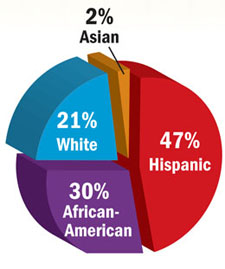
Colleges talk a lot about diversity in their university. Sometimes, though, it is unclear why they look for other races and ethnicities over White Americans. So why do they want the diversity? According to Jeremy Hyman from U.S News, diversity is used for improving students' learning in the University and preparing them for a diverse workforce.

Diversity expands worldliness. College might be the first time you have had the opportunity to have real interaction with people from diverse groups” (Hyman) With diversity, there will be more ethnicities that you can socialize with and learn about. This is one of the reasons why colleges will select the ethnic enriched student over the White American student, because they want their students to expand their minds to more parts of the world. Another reason Hyman explains is, Diversity prepares students for work in a global society. No matter what profession you enter, you'll find yourself working with employers, employees, coworkers, customers and clients from diverse backgrounds—worldwide.” In any job you have you will have to interact with different types of people and colleges want to socially prepare their students before they enter the workforce.

Although diversity is good for the students that are at the University, are there other motivations behind the mix of students? Colleges say that diversity is very good for education but it could be for their benefit instead. The Universities want to appeal to many more students so having the diversity invites a mix of students to their school. This will make the college look better. This will most definitely play into the college selection process as well, for the college and student. Colleges want diversity and sometimes so do the students. So ultimately it benefits both sides, but is it unfair to the White Americans? I guess it just depends on the student.

Future Research Topic: How does Economics Play into College Selection? and is it Fair?

Thursday, February 18, 2016

Do wealthier students have an easier time in the admission process?

https://northcentralcollege.edu


Many students that have an average academic ability but a higher wealth, will get into colleges over a little high academic ability and lower wealth. This is because of the need of money by colleges. If students can afford the tuition with little or no financial aid, they are students colleges will admit more frequently.
According to Kim Clark of USA news, “B students who don't need aid and apply to lots of colleges will likely have more fat acceptance envelopes than ever before.” Some would say that the admissions process is unfair to students that don’t have a lot of wealth but exceed in academics. This is true. If a student with a high GPA isn’t admitted to a college because of wealth it isn’t fair, although it is legal for a college to do so. The question that surfaces then is whether or not it should be a determining factor in the college selection process.
Rich international students, especially students from China, will be heavily recruited. In some cases, they will fill seats that would otherwise have gone to less wealthy Americans” (Clark). . Now the immigrants are stealing jobs and college spots from Americans? Colleges look for diversity when admitting students in their school. By admitting a Chinese person over an American, it shows their diversity more. However, now American students aren’t finding themselves going to college because of being declined from schools. How important is diversity to colleges?

Friday, February 5, 2016

Politics and College Selection


  • KEY ECONOMIC PRINCIPLES I’M ADDRESSING: 
  • Because of Scarcity people choose..
  • Institutions are the “rules of the game” that influence choices
  • OVERALL RESEARCH QUESTION: How much do politics play a role in college selection and how can it be changed?
  • SUB QUESTIONS
    • Do more wealthy students get into colleges over poorer smart students?
    • Do colleges accept more diverse students just for the look of the university?
    •  If colleges chose wealthier students, how does that affect the students not accepted in their future?

  • RESOURCES FOR RESEARCH:
    • DATABASES: Student Resources in Context and Opposing Views in Context
    • WEBSITES: The Daily Beast, New York Times and US News
Source: http://www.lentzsatprep.com